
Clemmons Previous Residents by Era
One address leaves different kinds of evidence in different periods. The first pass is the current Forsyth parcel record, then the Register of Deeds index and the tax-ledger trail. Older household work moves through directory street guides, census schedules, newspapers, maps, and probate files. Each source answers a narrower question: who held title, what address was printed, which people formed a household at a census point, or whether an event can explain a transfer.
| Source | Years It Covers | Where Held | What It Shows |
|---|---|---|---|
| Forsyth Register of Deeds index | County record history from 1849; real-estate images generally from 1973 | ForsythDeeds, Register of Deeds counter, older books or microfilm | Grantor, grantee, instrument, book/page or file, legal description, and image when available |
| Forsyth e-Ledger | January 1, 2004 forward, with an older-owner route | County e-Ledger | Ownership changes; not a complete occupant history |
| Directory shelf and street guides | Library shelf 1898 to present; selected digitized runs from 1879–80 through 1920–23 | North Carolina Room and DigitalNC | Name-to-address and address-to-name snapshots; rural omissions remain possible |
| Federal census | Decennial schedules released under the 72-year rule | National Archives and library databases | Household snapshot and demographic context, not annual occupancy |
| Sanborn maps and local newspapers | Map years and title coverage vary | Library of Congress, DigitalNC, North Carolina Room | Building or street context and dated community notices |
For recent transfers, start with the parcel and deed. For an older household, use the legal description to stabilize the address before turning to directories and census releases. A newspaper index or probate file can then test why a name appears or disappears.
Clemmons Previous Residents Start With Parcels
Save the current result before moving backward. The Forsyth County Tax Administration property search accepts owner or business name, location address, REID, and PIN. Record the owner spelling, situs address, mailing address, REID or PIN, subdivision or lot, and legal description. The situs is the parcel’s location; the mailing address is where tax correspondence goes and may be somewhere else.
The Forsyth Tax Parcel Viewer can cross-check the parcel with owner name, parcel number, REID, official address, or block and lot. Its geometry is useful for orientation, but a recorded deed or plat is the source for legal boundary facts. Keep a tax-map number, lot, and deed reference together so same-name transactions do not get mistaken for the same property.
Note: A tax owner and a property mailing address do not by themselves establish a complete list of people who lived at the address.
Clemmons Previous Residents Through Deeds
The backward title trail starts with the current owner as grantee, the party who received a deed. Open the purchase entry, capture its recording date, book/page or file number, instrument, seller, legal description, cross-reference, and image status. The seller is the next name to test as grantee in an earlier period. Match the parcel details at each turn rather than relying on a surname alone.
The Forsyth grantor-grantee deed search is the official index route for this party-by-party method.
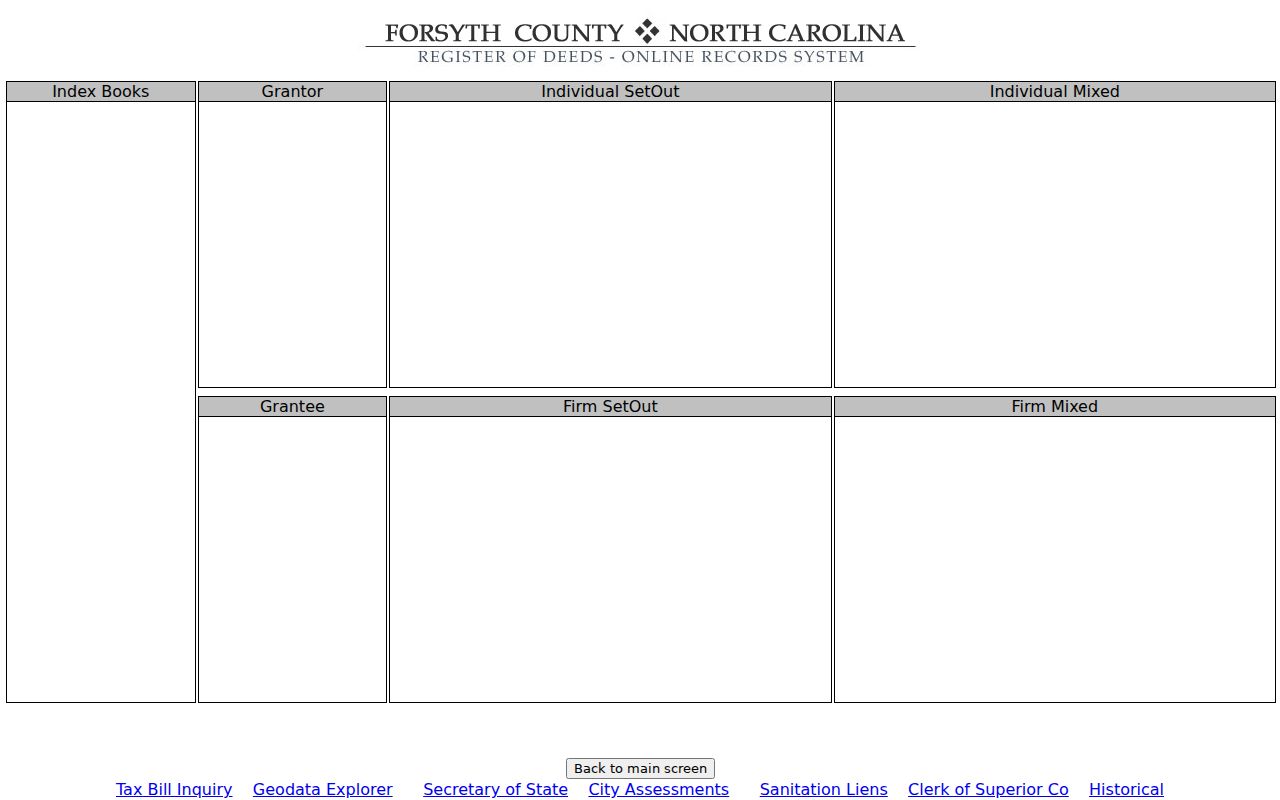
Use the index result as a citation trail, then check the deed image or an older book for the property description that confirms the match.
- Save the current tax parcel details, especially the legal description, lot, subdivision, REID or PIN, and exact owner spelling.
- Search that owner as a grantee and identify the deed that brought the parcel to the owner.
- Record the seller or grantor, the recording date, instrument type, book/page or file, and the property wording.
- Search the seller as a grantee in an earlier date range, then match lot, acreage, subdivision, road wording, or a cross-reference.
- Repeat until the index, a deed book, or another dated source ends the chain, documenting every uncertain match.
- Grantor and grantee
- The grantor transfers an interest; the grantee receives it. Both roles are needed in a backward deed search.
- Chain of title
- The sequence of recorded transfers tied to the same parcel, checked through names, dates, and property descriptions.
- Legal description
- The lot, subdivision, metes-and-bounds, road, or other recorded wording that identifies land more reliably than an old street number.
Forsyth Previous Residents Index and Images
Forsyth’s deed runway is deep, but the digital boundary matters. County instruments occur from 1849, and the online index or deed path reaches that history. Real-estate images are generally available from 1973 forward. An online index reaching back to 1849 does not mean every older deed can be opened as an online image.
For a nineteenth- or early-twentieth-century entry with no image, use the book/page at the Register of Deeds counter or ask about older deed books and microfilm. The county history describes hand-copied books from 1849–1904, typed books from 1904–1929, and microfilm beginning in 1954. The Forsyth official records search remains the first index check, but it is not the sole access channel.
This distinction prevents an image gap from being misread as a missing transfer. It can instead be a digitization limit, a format change, an index issue, or a record that must be viewed through the office’s older material.
Clemmons Previous Residents and Legal Descriptions
A road extension, a lot number, or a right-of-way phrase can bridge an old address to a present parcel. The Register of Deeds index supports name, date, and legal-description work, and its Standard, Full Text, and Sounds Like controls make spelling variants worth testing. Punctuation, ampersands, and articles may need alternate searches because the name rule is geared to alphabetic input.
A documented Clemmons example is the December 14, 1984 deed entry for L & B PROPERTIES, recorded as RE-1467-1538. Its description includes “PD:22865.55 SQ FT ARDEN ST EXTN CLEMMONS TP SUBJ R/W.” The example does not prove a link to every modern address on that road. It shows why road-extension and right-of-way wording can be a stronger bridge than a number alone.
Plats and subdivision maps add the lot and block relationship. The ROD map categories supply the recorded instrument route, while GIS supplies orientation. Where the address does not line up, retain the competing descriptions until a deed, plat, map, or street guide connects them.
Past Clemmons Residents in Directories and Census
Deeds trace title, not every household. Once the parcel and an era are set, use a reverse or criss-cross street guide to move from a number to a listed name, then read the alphabetical directory entry. A 1904–05 Forsyth entry can show a spouse in parentheses, an occupation abbreviation, a residence marker, street, section code, and “r same.” Later Hill’s volumes may add telephone and street-guide routes.
The Forsyth city-directory coverage bibliography identifies the available run for this household step.
The bibliography helps select an edition, while the printed or scanned volume supplies the actual address-to-name or name-to-address evidence.
- Search the street guide or criss-cross section for the address and record the edition and section.
- Read the matching alphabetical entry and preserve the original spelling, address form, and residence notation.
- Check nearby editions for moves, nearby post-office labels, or a rural omission.
- Pair an intervening edition with the matching released federal census schedule for a dated household snapshot.
- Use a newspaper index, obituary, or probate record to test a move, death, estate transfer, or family link.
The collections and publisher runs belong to the Clemmons city directory collection research path. Here, they serve one address backward through time rather than a general survey of the shelf.
Clemmons Previous Residents at the Library
No separate branded house-history guide was verified for Forsyth County. The documented service path is the Forsyth County Public Library North Carolina Room, which holds directories, street guides, local newspaper indexes, microfilm, vertical files, photographs, maps, and genealogy materials. Library assistance is the practical fallback when a tax portal, digitized directory, or deed image does not answer the older question.
The newspaper index covers the Winston-Salem Journal, The Sentinel, Union Republican, Winston-Salem Chronicle, and Clemmons Journal. A result may identify a date and page for an obituary, marriage announcement, civic notice, or address reference. It is an index lead, not full text, so request the microfilm page or reproduction under current library policy.
Personal-use boundary. Previous-resident research can support family history, estate questions, and an address history. Do not use names, locations, or source details to stalk, harass, or harm anyone.
Clemmons Previous Residents and Old Addresses
No verified Clemmons-wide street-renumbering year was located. Do not invent one to force an address match. Rural roads, later village development, subdivision plats, and changing postal labels make the address-continuity problem real even without a documented renumbering event. Work from the legal description, lot, plat, tax map, Village map, old street guide, and newspaper road-name notice.
The DigitalNC Sanborn collection offers a map route for building and street context where coverage exists.
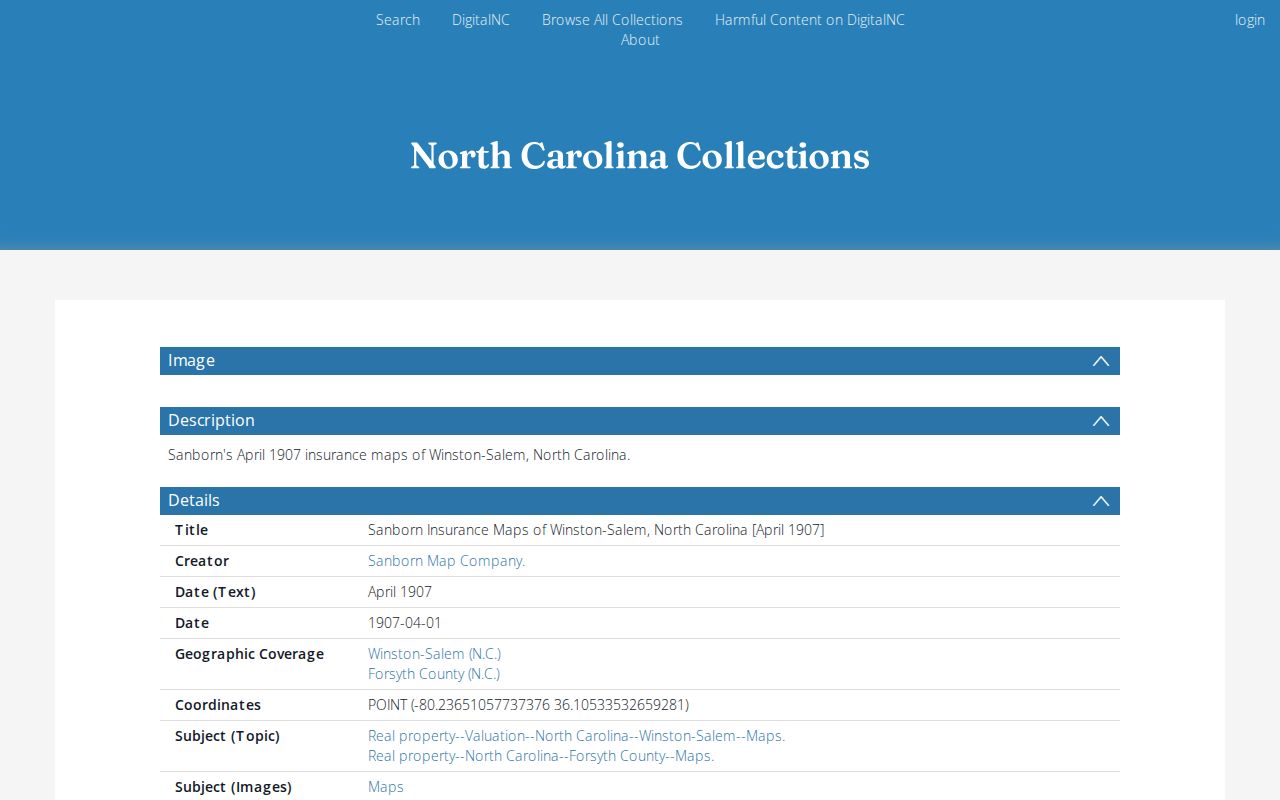
Sanborn coverage is strongest for built-up Winston-Salem and may not reach a rural Clemmons road, so it is supporting context rather than a universal address map.
Historical permits can also help date construction or an addition. Clemmons pointed to OpenGov for permitting and licensing, but that portal was temporarily inaccessible during research. For older address-specific material, use the Village public-record request route with the address, parcel or lot, date range, and document type.
Clemmons Previous Residents at Probate Endpoints
An obituary may identify a last residence, surviving spouse, parents, or funeral home. Probate and estate files can identify heirs, an executor, and estate property. These facts should be treated as separate sources from the deed chain. A death notice does not transfer land by itself, and a probate reference does not establish that the same parcel passed without the supporting deed record.
Forsyth County’s Clerk of Superior Court holds probate and estate files, as well as county-level certified court copies. The Forsyth County court location and directory provides the official route for the Clerk. Protected or restricted material may not be available in a public portal result, so the complete file and a web search are different access channels.
Use the name, date, and property wording to compare a probate event with the next recorded transfer. That keeps a family connection or estate reference from being folded into the title chain without evidence.
Forsyth Records From Books to Indexes
Forsyth County formed from Stokes County on January 16, 1849. Its records history moves from hand-copied books to typed books, microfilm, and computerized indexes. That sequence is useful when a Clemmons address trail suddenly changes in handwriting, abbreviation style, or image availability. It also explains why a record may require a counter, book, or microfilm search even after an online index has located it.
The Village of Clemmons history page supplies local context for Clemmonsville and the older community landscape behind modern parcel fields.
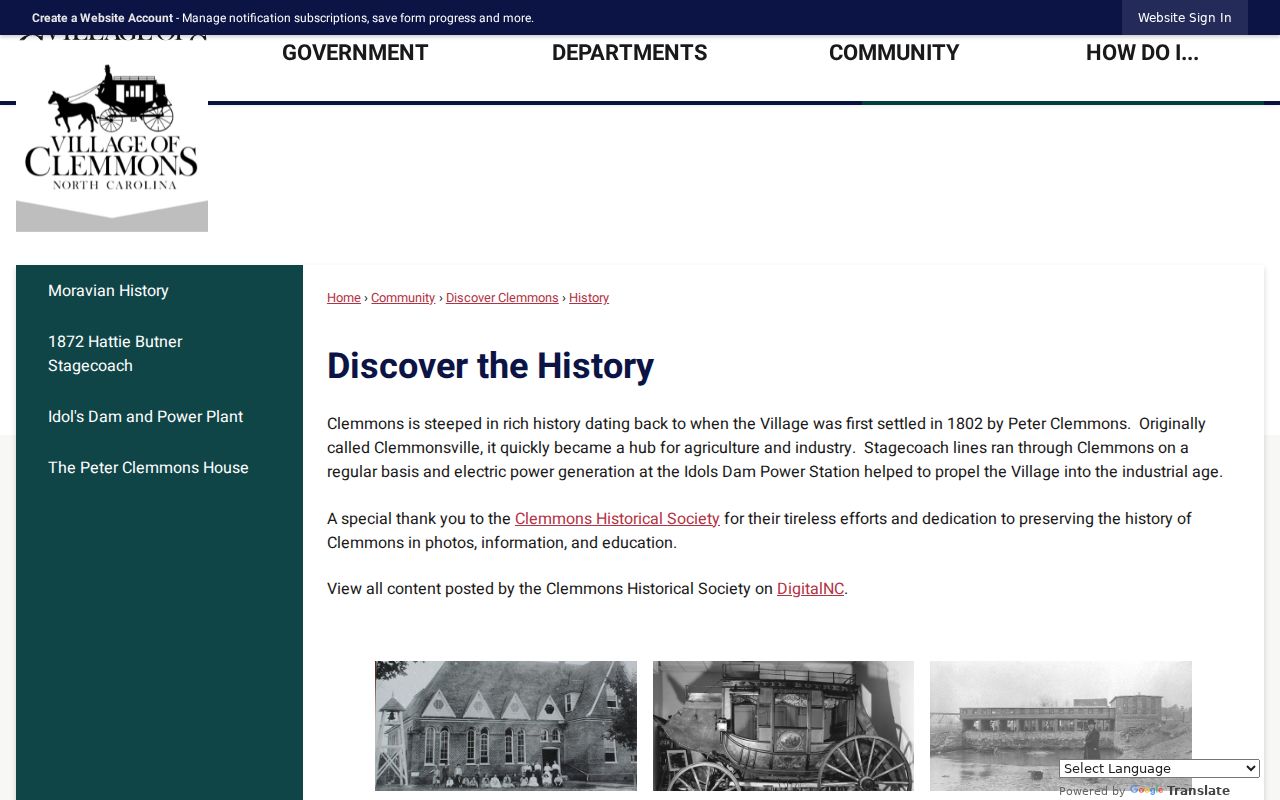
Use local history to generate older place-name terms, then return to the dated deed, directory, map, newspaper, or court record for the address-specific finding.
Note: Record the source date and the uncertainty at every step, particularly when a historical place label does not match a current Clemmons address.